-

Add: HeBei ShengShi HongBang Cellulose Technology CO.,LTD.
-

Email
13180486930@163.com -

CONTACT US
+86 13180486930

Understanding What is Cellulose Made of Wood Its Structure and Applications
What is Cellulose Made of Wood? A Deep Dive
Cellulose, the most abundant organic polymer on Earth, is the fundamental building block of plant cell walls, and therefore, wood. Understanding what is cellulose made of wood is crucial to comprehending wood’s properties and its numerous applications. This article will explore the composition of cellulose, its structure, how it's extracted from wood, and its diverse uses, with a focus on its industrial significance. From paper production to innovative biomaterials, cellulose plays a vital role in many sectors. Let's explore the fascinating world of this remarkable natural compound.
The Chemical Composition of Cellulose
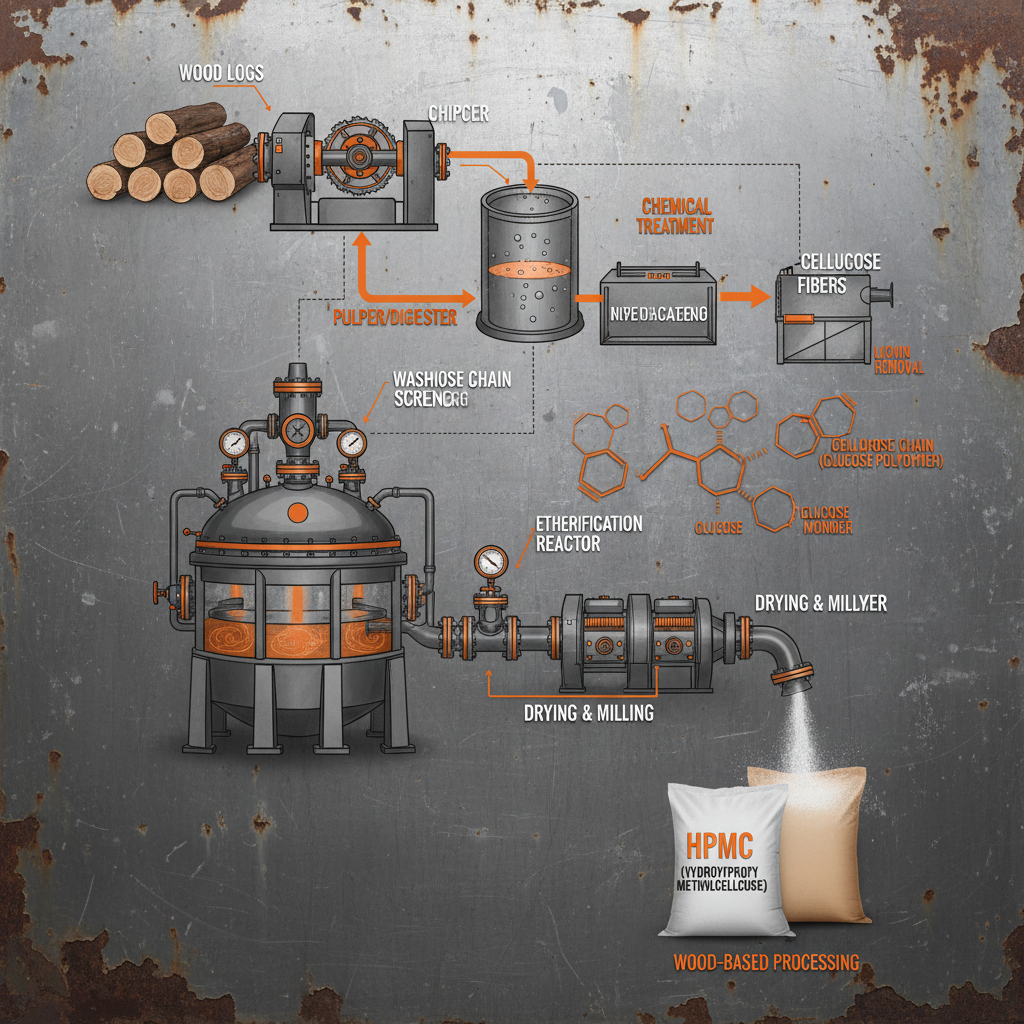
Cellulose is a complex carbohydrate, specifically a polysaccharide. This means it's a long chain of repeating sugar molecules – in this case, glucose. Each glucose molecule (C6H12O6) is linked together by β-1,4-glycosidic bonds. These bonds give cellulose its unique strength and rigidity. Unlike starch, which is also a glucose polymer, the arrangement of these bonds in cellulose creates a linear, extended chain. This structural difference is key to understanding why cellulose is so strong and resistant to breakdown. The chains align themselves in parallel, forming microfibrils which then bundle together to create fibers.
Key Takeaway: Cellulose is composed of long chains of glucose molecules linked by β-1,4-glycosidic bonds, giving it exceptional strength and stability.
How Cellulose is Formed Within Wood
Within wood, cellulose is synthesized in the cell walls of plants. It's created by enzymes within the plant cells, combining glucose molecules produced during photosynthesis. These cellulose chains are then embedded in a matrix of other substances, primarily hemicellulose and lignin. Lignin provides rigidity and waterproofing, while hemicellulose acts as a glue, holding the cellulose fibers together. The proportion of cellulose, hemicellulose, and lignin varies depending on the wood species. For example, softwoods like pine generally have a higher lignin content, while hardwoods like maple have a higher cellulose content. This differing composition contributes to the different properties of each type of wood.
Extracting Cellulose from Wood: Pulping Processes
To use cellulose for industrial purposes, it must be separated from the lignin and hemicellulose. This process is called pulping. There are several methods used, broadly categorized as mechanical, chemical, and semi-chemical. Mechanical pulping grinds the wood into fibers, retaining most of the lignin. Chemical pulping, like the Kraft process, uses chemicals to dissolve the lignin, leaving behind relatively pure cellulose fibers. Semi-chemical methods combine mechanical and chemical treatments. The choice of pulping process impacts the quality and properties of the resulting cellulose. SSHBHPMC specializes in producing high-quality cellulose derivatives derived from sustainable wood sources.
Pulping Process Comparison:
• Mechanical Pulping: High yield, lower strength, higher lignin content.
• Chemical Pulping: Lower yield, higher strength, lower lignin content.
• Semi-Chemical Pulping: Intermediate yield and properties.
Applications of Cellulose: From Paper to Biomaterials
Cellulose has a vast array of applications. The most well-known is paper production, where cellulose fibers are used to create various types of paper and cardboard. However, its uses extend far beyond this. Cellulose derivatives, such as cellulose ethers (like carboxymethyl cellulose), are used as thickeners, stabilizers, and binders in food, pharmaceuticals, cosmetics, and construction materials. More recently, cellulose is being explored as a sustainable alternative to plastics, with research focusing on creating biodegradable films and packaging materials. Furthermore, cellulose nanocrystals (CNC) and cellulose nanofibrils (CNF) are emerging as high-performance materials with applications in composites, coatings, and biomedical engineering.
The Future of Cellulose: Sustainable Innovation
As the world seeks more sustainable materials, cellulose is poised to play an increasingly important role. Ongoing research is focused on improving the efficiency of cellulose extraction, developing new cellulose-based materials, and exploring novel applications. From reducing our reliance on fossil fuels to creating eco-friendly products, cellulose offers a promising path towards a more sustainable future.
Conclusion: Harnessing the Power of Nature's Polymer
Understanding what is cellulose made of wood opens doors to countless innovative applications. Its abundance, renewability, and unique properties make it an invaluable resource for a sustainable future. Continued research and development will undoubtedly unlock even more potential for this remarkable natural polymer.
Frequently Asked Questions (FAQs)
What is the difference between cellulose, hemicellulose, and lignin?
Cellulose, hemicellulose, and lignin are the primary components of wood. Cellulose provides strength and structure, forming the backbone of plant cell walls. Hemicellulose is a more branched and amorphous polysaccharide that acts as a connecting agent between cellulose fibers. Lignin is a complex polymer that provides rigidity and waterproofing, and gives wood its woody texture. While all three are essential, cellulose is typically the most desirable component for industrial applications due to its high purity and strength. Their proportions vary by wood species impacting the wood's overall properties.
Is cellulose biodegradable?
Yes, cellulose is readily biodegradable under the right conditions. Microorganisms in the environment, such as bacteria and fungi, can break down cellulose into glucose, which is then metabolized. This biodegradability is one of the key advantages of cellulose as a sustainable alternative to synthetic polymers. However, the rate of biodegradation can vary depending on factors such as temperature, moisture, and the presence of specific microorganisms.
What are cellulose nanocrystals (CNCs) and how are they used?
Cellulose nanocrystals (CNCs) are tiny, crystalline structures extracted from cellulose fibers. They exhibit exceptional strength and stiffness, making them ideal for reinforcing materials. CNCs are used in a wide range of applications, including composites (enhancing the strength of plastics), coatings (improving scratch resistance), biomedical engineering (drug delivery systems), and even cosmetics. Their high aspect ratio and renewable origin make them a highly promising nanomaterial.
How does the source of wood affect the quality of cellulose?
The source of wood significantly impacts cellulose quality. Hardwoods generally yield cellulose with higher purity and brightness compared to softwoods, due to their lower lignin content. Different tree species also have varying cellulose chain lengths and crystallinity, which affect the final properties of the cellulose product. Sustainable forestry practices are crucial to ensure a consistent and responsible supply of high-quality cellulose. SSHBHPMC carefully sources its wood from sustainably managed forests.
-
Industrial Guide to ГПМЦ целлюлоза High Performance CelluloseNewsApr.16,2026
-
Wood Cellulose Properties and Industrial Applications GuideNewsApr.09,2026
-
Does Wood Contain Cellulose A Detailed Exploration of its Composition and UsesNewsApr.07,2026
-
Understanding Wood Cellulose Meaning Applications and Future TrendsNewsApr.04,2026
-
Exploring the Potential of Wood Cellulose is wood cellulose a Sustainable MaterialNewsMar.31,2026
-
Exploring the Sustainability and Versatility of Cellulose Wood ChipsNewsMar.28,2026
-
Understanding Wood Pulp Cellulose A Comprehensive Guide to Properties and ApplicationsNewsMar.26,2026