-

Add: HeBei ShengShi HongBang Cellulose Technology CO.,LTD.
-

Email
13180486930@163.com -

CONTACT US
+86 13180486930

Does Wood Contain Cellulose A Detailed Exploration of its Composition and Uses
Does Wood Contain Cellulose? A Comprehensive Guide
Cellulose is the most abundant organic polymer on Earth, and it's a fundamental component of plant life. But specifically, does wood contain cellulose? The answer is a resounding yes! In fact, wood is primarily composed of cellulose, alongside other components like lignin and hemicellulose. Understanding this composition is crucial in various industries, from paper production and textiles to biofuel development. This article will delve into the relationship between wood and cellulose, exploring its structure, proportion, and significance. We'll also discuss how cellulose is extracted from wood and its diverse applications.
What is Cellulose and Why is it Important?
Cellulose is a complex carbohydrate that forms the structural component of plant cell walls. It’s a linear polymer of glucose molecules, linked together by beta-1,4-glycosidic bonds. This unique bond arrangement gives cellulose its strength and rigidity. This makes it incredibly important to the plant kingdom, providing support and structure. But its importance extends far beyond plants. Cellulose is a renewable resource with a wide range of industrial applications, making it a vital material in countless products we use daily.
Key Highlights: Cellulose is a linear polymer of glucose, providing strength and rigidity to plant cell walls. It's a renewable resource crucial to many industries.
How Much Cellulose Does Wood Contain?
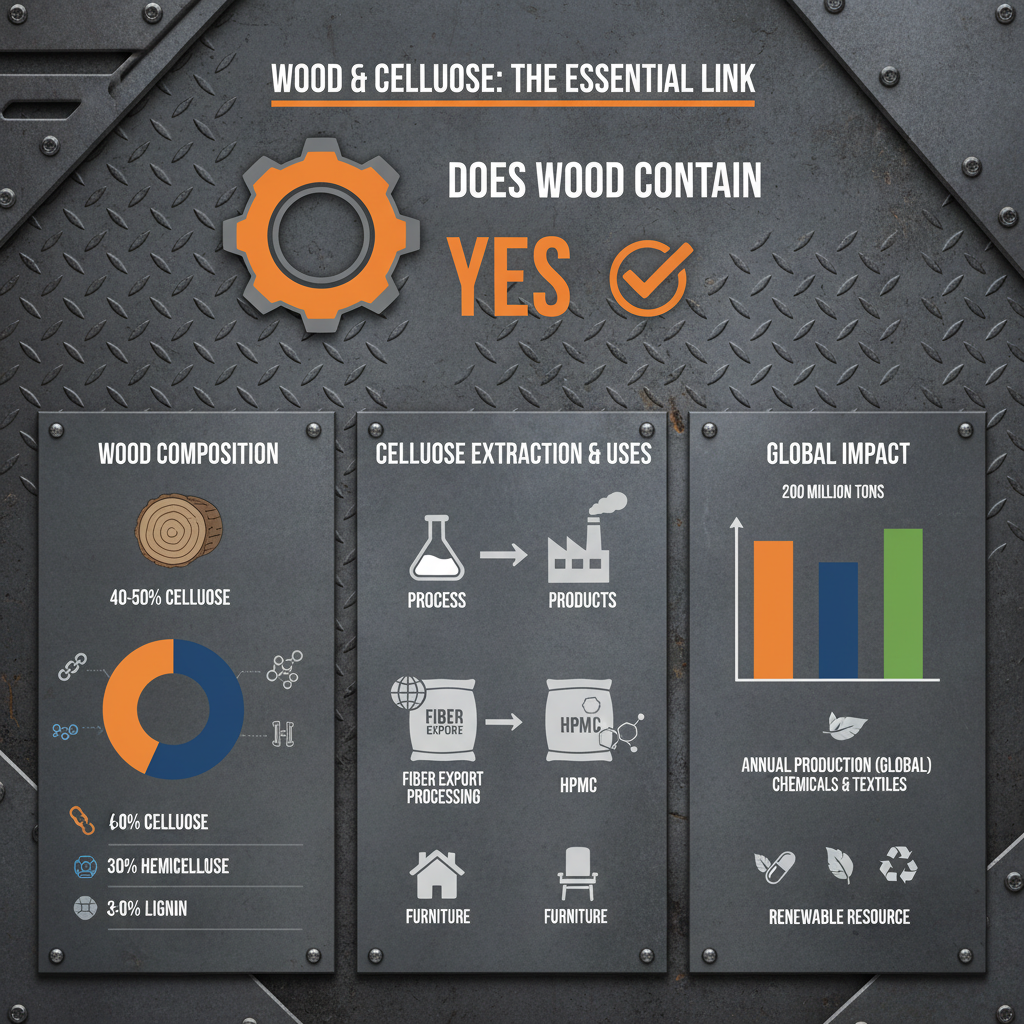
The proportion of cellulose in wood varies depending on the wood species, but it generally constitutes between 40% and 60% of its dry weight. Softwoods, like pine and fir, typically have a slightly higher cellulose content (around 45-50%) compared to hardwoods, such as oak and maple (around 40-45%). The remaining composition consists of lignin (25-35%), hemicellulose (15-25%), and small amounts of extractives like resins and oils. Understanding these proportions is vital for optimizing wood processing and utilizing its different components efficiently. SSHBHPMC specializes in handling and processing wood-derived materials, including cellulose.
Wood Composition Breakdown:
• Cellulose: 40-60%
• Lignin: 25-35%
• Hemicellulose: 15-25%
• Extractives: 1-10%
Cellulose Extraction from Wood: Methods and Processes
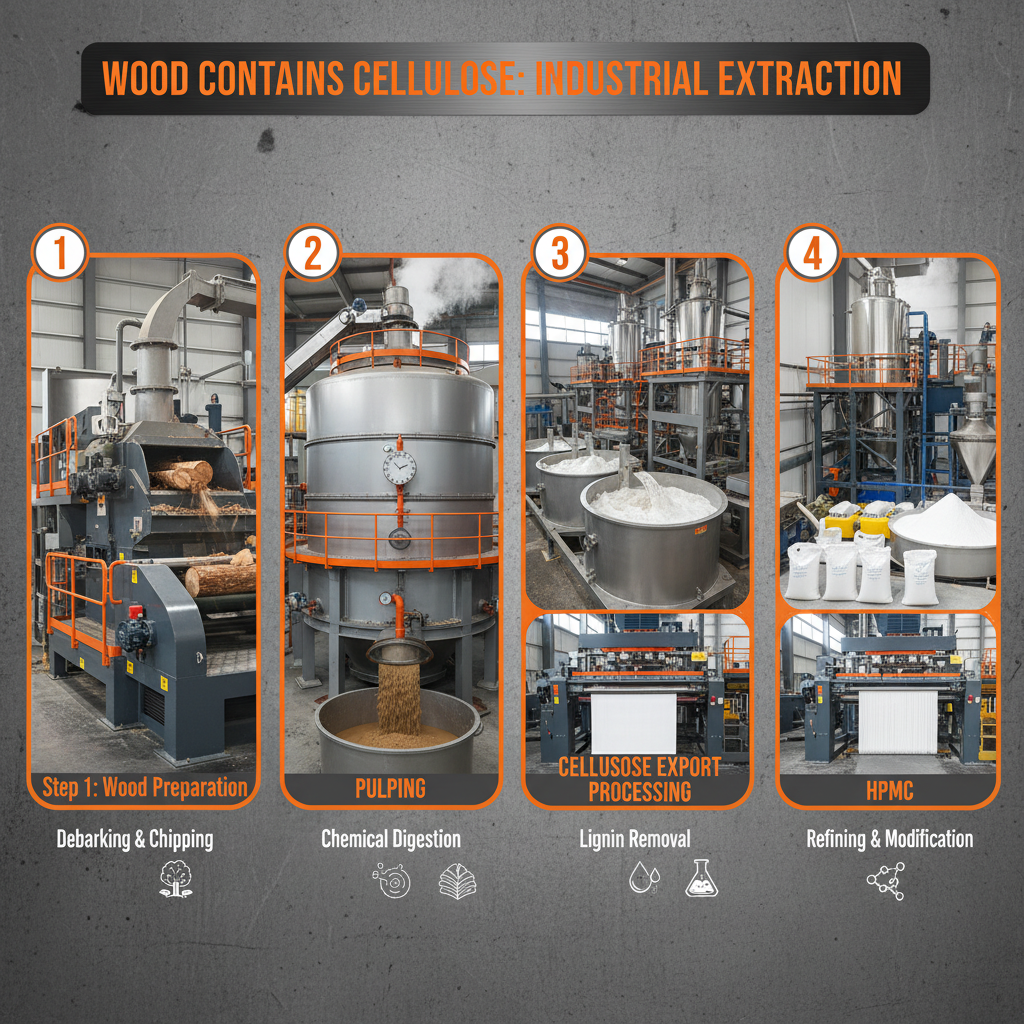
Extracting cellulose from wood involves separating it from lignin and hemicellulose. Several methods are employed, including mechanical pulping, chemical pulping (like the Kraft process), and emerging enzymatic processes. Mechanical pulping yields a higher cellulose content but produces lower quality cellulose with residual lignin. Chemical pulping utilizes chemicals to dissolve lignin, resulting in purer cellulose but requires careful waste management. Enzymatic processes are gaining traction as environmentally friendly alternatives, employing enzymes to break down lignin. The choice of method depends on the desired cellulose purity and end application.
Applications of Cellulose Derived from Wood
The cellulose extracted from wood has a vast range of applications. It's a primary raw material for paper and cardboard production. Furthermore, it’s used in the textile industry to create rayon and other cellulose-based fibers. The chemical modification of cellulose yields cellulose derivatives like cellulose acetate, used in films, plastics, and cigarette filters. Increasingly, cellulose is being explored as a sustainable feedstock for biofuels and bioplastics, offering alternatives to fossil fuel-based materials. The versatility of wood-derived cellulose continues to drive innovation in diverse sectors.
The Future of Wood Cellulose: Sustainability and Innovation
As the world shifts towards more sustainable materials, wood cellulose is poised to play an even more prominent role. Ongoing research focuses on developing more efficient and environmentally friendly extraction methods, enhancing the properties of cellulose-based materials, and expanding their applications. From biodegradable packaging to advanced biomedical materials, the potential of wood cellulose is immense. SSHBHPMC is dedicated to sustainable wood processing and providing high-quality cellulose products to meet the evolving needs of various industries.
Conclusion: The Versatile World of Wood Cellulose
Wood undeniably contains cellulose, and this fact underpins a massive range of industries and applications. From its structural role in plants to its diverse uses in manufacturing and emerging technologies, cellulose derived from wood is a crucial and sustainable resource. As research and development continue, the potential of wood cellulose will only grow, shaping a more environmentally friendly future.
Frequently Asked Questions (FAQs)
What are the differences between cellulose, hemicellulose, and lignin?
Cellulose, hemicellulose, and lignin are the three main components of wood. Cellulose is a long, linear polymer of glucose, providing strength and structure. Hemicellulose is a branched polymer of various sugars, offering flexibility and binding properties. Lignin is a complex polymer that provides rigidity and resistance to decay. While cellulose is crystalline and highly ordered, hemicellulose and lignin are amorphous and more complex in structure. Lignin essentially acts as a glue, holding the cellulose fibers together and providing strength and resistance to compression.
Can cellulose be used to create biodegradable plastics?
Yes, cellulose can be modified and processed to create biodegradable plastics. Cellulose acetate, for example, is a commonly used bioplastic derived from cellulose. Researchers are also exploring other cellulose-based materials like cellulose nanocrystals and bacterial cellulose for plastic applications. These materials offer a more sustainable alternative to traditional petroleum-based plastics, as they are renewable and decompose naturally.
What is the role of cellulose in plant life?
Cellulose is the primary structural component of plant cell walls, providing rigidity and support. It allows plants to grow tall and withstand external forces. Cellulose also plays a crucial role in regulating water transport within plants. The organization of cellulose fibers determines the strength and flexibility of different plant parts, from stems and branches to leaves and roots.
How is cellulose being used in the biofuel industry?
Cellulose is a promising feedstock for biofuel production because of its abundance and renewability. The cellulose in wood and other plant materials can be broken down into sugars, which are then fermented to produce ethanol or other biofuels. However, breaking down cellulose into fermentable sugars is challenging due to its complex structure. Researchers are developing enzymatic and chemical processes to efficiently convert cellulose into biofuels, offering a sustainable alternative to fossil fuels.
-
Industrial Guide to ГПМЦ целлюлоза High Performance CelluloseNewsApr.16,2026
-
Wood Cellulose Properties and Industrial Applications GuideNewsApr.09,2026
-
Understanding Wood Cellulose Meaning Applications and Future TrendsNewsApr.04,2026
-
Exploring the Potential of Wood Cellulose is wood cellulose a Sustainable MaterialNewsMar.31,2026
-
Exploring the Sustainability and Versatility of Cellulose Wood ChipsNewsMar.28,2026
-
Understanding Wood Pulp Cellulose A Comprehensive Guide to Properties and ApplicationsNewsMar.26,2026
-
What is Wood Cellulose A Comprehensive Exploration of Properties and ApplicationsNewsMar.24,2026