-

Add: HeBei ShengShi HongBang Cellulose Technology CO.,LTD.
-

Email
13180486930@163.com -

CONTACT US
+86 13180486930

Understanding What Is Cellulose In Wood Its Structure And Applications
What is Cellulose in Wood? A Comprehensive Guide
Wood, a seemingly simple natural material, possesses a complex structure. At its heart lies cellulose, the most abundant organic polymer on Earth. Understanding what cellulose is in wood is crucial for appreciating its properties, uses, and processing. This article will delve into the composition, structure, and significance of cellulose, its role in wood's characteristics, and its applications beyond traditional woodworking. Explore how SSHBHPMC leverages wood-derived cellulose in innovative products. We’ll cover everything from its basic chemical structure to its industrial applications.

The Chemical Composition of Cellulose
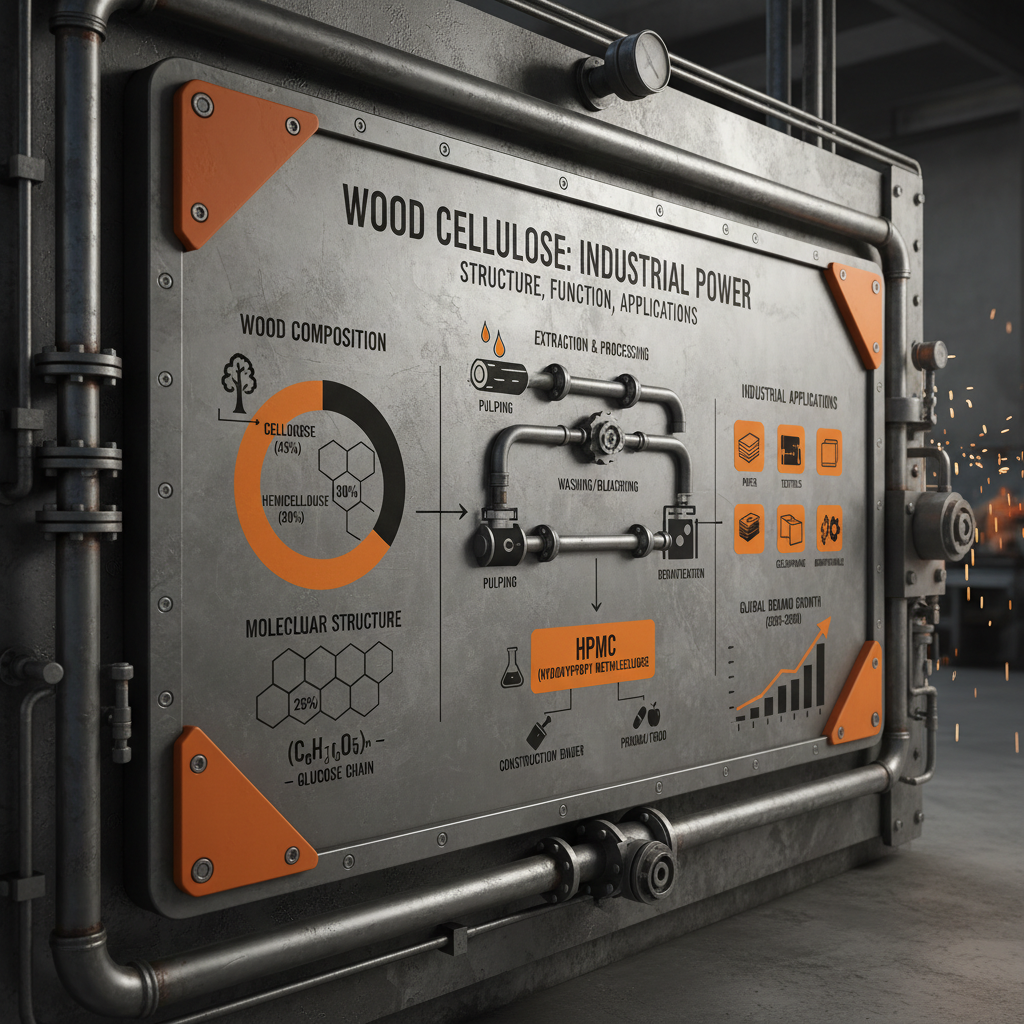
Cellulose is a polysaccharide, meaning it’s a large carbohydrate molecule composed of repeating glucose (sugar) units. These glucose units are linked together by β-1,4-glycosidic bonds, forming long, linear chains. These chains then associate with each other through hydrogen bonding, creating strong, crystalline microfibrils. It is these microfibrils that give wood its strength and rigidity. The chemical formula for cellulose is (C6H10O5)n, where 'n' represents the number of glucose units. Different types of wood contain varying amounts of cellulose, alongside other components like lignin and hemicellulose.
Key Takeaway: Cellulose is a naturally occurring polymer of glucose, forming the structural basis of plant cell walls and contributing significantly to wood's mechanical properties.
Cellulose's Structure and its Impact on Wood Properties
The unique structure of cellulose directly influences wood's properties. The crystalline arrangement of cellulose microfibrils provides high tensile strength – resistance to being pulled apart. The orientation of these microfibrils within the wood cell walls dictates how the wood behaves under stress. For example, wood is stronger along the grain (where the microfibrils are aligned) than across the grain. The degree of crystallinity, which refers to how well-ordered the cellulose structure is, also impacts wood density and stiffness. Higher crystallinity generally equates to stronger, denser wood.
Cellulose Structure & Wood Properties:
• Tensile Strength: Crystalline microfibrils resist pulling forces.
• Grain Direction: Microfibril orientation dictates wood's strength along and across the grain.
• Crystallinity: Higher crystallinity leads to denser, stronger wood.
What is Cellulose in Wood? Comparing Wood Species
The amount of cellulose present varies between wood species, impacting their characteristics. Softwoods, like pine and fir, generally have a lower cellulose content (around 40-50%) compared to hardwoods, such as oak and maple (around 45-55%). However, this is not the sole determinant of a wood's properties. The ratio of cellulose to lignin and hemicellulose, along with the arrangement of the cellulose microfibrils, plays a vital role. Here's a comparative look:
Industrial Applications of Cellulose
Beyond its role in wood, cellulose is a versatile material with numerous industrial applications. It's a key component in paper and cardboard production. Modified cellulose derivatives, such as cellulose acetate, are used to create fabrics, films, and plastics. Microcrystalline cellulose (MCC) is a common excipient in pharmaceuticals, serving as a binder and filler in tablets. More recently, cellulose nanocrystals (CNCs) and cellulose nanofibers (CNFs) are gaining attention as sustainable materials for composites, coatings, and biomedical applications. SSHBHPMC is at the forefront of developing innovative applications for cellulose-based materials.
Cellulose Processing and Modification
To unlock the full potential of cellulose for various applications, it often undergoes processing and modification. Common methods include pulping (separating cellulose fibers from lignin and other wood components), bleaching (removing color), and chemical modification (introducing new functional groups to alter its properties). For example, carboxymethyl cellulose (CMC) is created by adding carboxymethyl groups to cellulose, making it water-soluble and useful as a thickening agent. Nanocellulose production involves breaking down cellulose fibers into extremely small dimensions, resulting in materials with exceptional strength and unique properties.
Conclusion: The Significance of Cellulose
Understanding what cellulose is in wood and its diverse applications highlights its importance as a renewable resource. From providing structural integrity to wood to serving as a building block for innovative materials, cellulose plays a crucial role in countless industries. As research continues to unlock its full potential, we can expect to see even more sustainable and groundbreaking applications of this remarkable natural polymer. Explore further the innovative solutions at SSHBHPMC.
Frequently Asked Questions (FAQs)
What is the difference between cellulose, hemicellulose, and lignin?
These are the three main components of wood. Cellulose provides strength and structure, as discussed. Hemicellulose is a shorter, branched polysaccharide that acts as a connector between cellulose fibers, contributing to wood's flexibility. Lignin is a complex polymer that provides rigidity and resistance to decay. While cellulose is crystalline and organized, hemicellulose is amorphous and lignin is largely non-structural. Their proportions vary between wood species, influencing the wood's properties. Understanding these differences is key to appreciating the complex composition of wood.
Is cellulose biodegradable?
Yes, cellulose is readily biodegradable under the right conditions. Microorganisms in soil and water can break down cellulose into glucose, which is then used as an energy source. This makes cellulose a sustainable and environmentally friendly material. However, the rate of biodegradation can vary depending on factors such as temperature, moisture, and the presence of other substances. Modified cellulose derivatives may exhibit different biodegradation rates.
What are cellulose nanocrystals (CNCs) and what are they used for?
Cellulose nanocrystals (CNCs) are incredibly small, rod-shaped crystals extracted from cellulose fibers. They possess exceptional strength, stiffness, and high surface area. CNCs are used in a wide range of applications, including reinforcing composites, creating transparent films, developing biomedical materials, and enhancing the performance of coatings and adhesives. Their renewable nature and biocompatibility make them an attractive alternative to synthetic materials.
How does lignin affect cellulose in wood?
Lignin acts as a glue that holds the cellulose fibers together in wood, providing rigidity and resistance to decay. However, lignin also hinders the accessibility of cellulose for certain applications, such as paper production. Removing lignin through pulping processes is often necessary to isolate and utilize cellulose effectively. The amount and type of lignin present significantly influence the wood’s properties, like its color, density, and resistance to biological attack.
-
Industrial Guide to ГПМЦ целлюлоза High Performance CelluloseNewsApr.16,2026
-
Wood Cellulose Properties and Industrial Applications GuideNewsApr.09,2026
-
Does Wood Contain Cellulose A Detailed Exploration of its Composition and UsesNewsApr.07,2026
-
Understanding Wood Cellulose Meaning Applications and Future TrendsNewsApr.04,2026
-
Exploring the Potential of Wood Cellulose is wood cellulose a Sustainable MaterialNewsMar.31,2026
-
Exploring the Sustainability and Versatility of Cellulose Wood ChipsNewsMar.28,2026
-
Understanding Wood Pulp Cellulose A Comprehensive Guide to Properties and ApplicationsNewsMar.26,2026