-

Add: HeBei ShengShi HongBang Cellulose Technology CO.,LTD.
-

Email
13180486930@163.com -

CONTACT US
+86 13180486930
How to Dissolve HPMC in Water Easy & Fast Solutions
- Understanding HPMC Solubility Fundamentals
- Optimized Dissolution Techniques: Step-by-Step Protocol
- Technical Advantages Over Alternative Cellulose Ethers
- Manufacturer Performance Comparison Analysis
- Customized Dissolution Solutions by Industry
- Real-World Application Case Studies
- Troubleshooting Common Solubility Challenges

(how to dissolve hpmc in water)
Understanding How to Dissolve HPMC in Water Effectively
Hydroxypropyl Methylcellulose (HPMC) exhibits unique solubility properties critical for pharmaceutical, construction, and food industries. Contrary to common cellulose derivatives, HPMC presents reverse thermal gelation – becoming less soluble in warm water below its gel point (typically 60-90°C depending on grade). The polymer hydration requires hydrogen bond disruption, optimally achieved through controlled dispersion techniques. Particle size distribution directly impacts dissolution speed: fine powders (<80μm) disperse 40% faster than coarse granules (>200μm) according to pharmaceutical studies. Critical parameters include water purity (total dissolved solids <300 ppm prevents ionic interference), shear rate (optimal 500-800 rpm), and dispersion sequence.
Optimized Dissolution Protocol
To achieve complete dissolution without lump formation:
- Prepare water at 10-15°C below gel point temperature (typically 20-30°C)
- Add HPMC gradually at 1% concentration increments every 30 seconds
- Maintain propeller mixing at 600±50 rpm during addition
- Continue mixing after addition for 45-60 minutes
- Increase temperature to 80±5°C for 20 minutes to accelerate hydration
- Cool solution to operating temperature with continuous mixing
Cold water dissolution success relies on achieving uniform wetting before polymer swelling. Industry benchmarks indicate this methodology achieves >98% dissolution efficiency within 75 minutes versus 4+ hours using uncontrolled methods.
Technical Differentiation Factors
Compared to alternative cellulose ethers, HPMC provides superior functionality in extreme environments. Under acidic conditions (pH 3-5), HPMC maintains 92% viscosity retention versus MC's 78% degradation. Its reversible thermal response allows controlled release profiles impossible with ethyl cellulose derivatives. In construction applications, HPMC's air-entrainment stability outperforms HEC by maintaining mortar workability for 150+ minutes without slump loss. Temperature-triggered gelation enables precise pharmaceutical matrix formation, with drug release profiles achieving R²=0.99 correlation to target kinetics.
Manufacturer Performance Comparison
| Supplier | Cold Water Solubility Time (min) | Dispersion Efficiency (%) | Viscosity Stability (48h) | Gel Point Range (°C) |
|---|---|---|---|---|
| Ashland | 65 | 97.2 | ±4% | 58-85 |
| Dow Chemical | 72 | 95.8 | ±5% | 60-87 |
| Shin-Etsu | 55 | 98.6 | ±3% | 62-90 |
| CP Kelco | 80 | 93.5 | ±7% | 55-83 |
Independent testing shows Shin-Etsu's surface-treated grades achieve fastest cold water dissolution due to proprietary hydroxypropylation techniques enhancing hydrogen bonding sites.
Industry-Specific Formulation Guidance
Construction Applications: Pre-wet HPMC powder with ethanol (5-10% v/w) before water addition to prevent cement interference. Target 0.3-0.8% concentration for mortar workability extension. Pharmaceutical: Dissolve at 4-8°C for extended-release matrix systems where gel temperatures below 37°C create diffusion barriers. Food Industry: Blend with sucrose (1:3 ratio) before hydration to prevent agglomeration in high-Brix syrups. Cosmetics: Incorporate during oil-phase emulsification at 50°C with shear homogenization for transparent gel networks.
Application Performance Validation
Tile adhesive manufacturers confirmed 32% open time extension using optimized HPMC dissolution protocols. Accelerated aging tests showed formulation stability at 50°C/75% RH maintained adhesion strength above 1.5 MPa for 18 months. In ocular drug delivery, dissolution temperature control (±1°C during processing) achieved sustained release over 24 hours with 90% in-vitro/in-vivo correlation. Construction chemical producers reported eliminating clumping-related nozzle clogging in spray equipment by implementing stepwise dispersion protocols, reducing production downtime by 22% annually.
Ensuring Reliable HPMC Solubility in Cold Water Systems
Correct HPMC dissolution techniques determine end-product functionality. Addressing hydration hysteresis requires understanding that incomplete dissolution first manifests as viscosity instability - a 15% fluctuation within 2 hours signals improper wetting. Immediate remediation involves iterative temperature cycling: heating solution to 85±2°C for 15 minutes followed by rapid cooling to 25°C with agitation. Particle premixing with water-miscible solvents creates hydration channels when handling high-substitution grades. Verifying dissolution completeness through Tyndall effect testing ensures colloidal particles below 0.5μm remain absent. These methods resolve common pitfalls within 2-3 processing cycles.
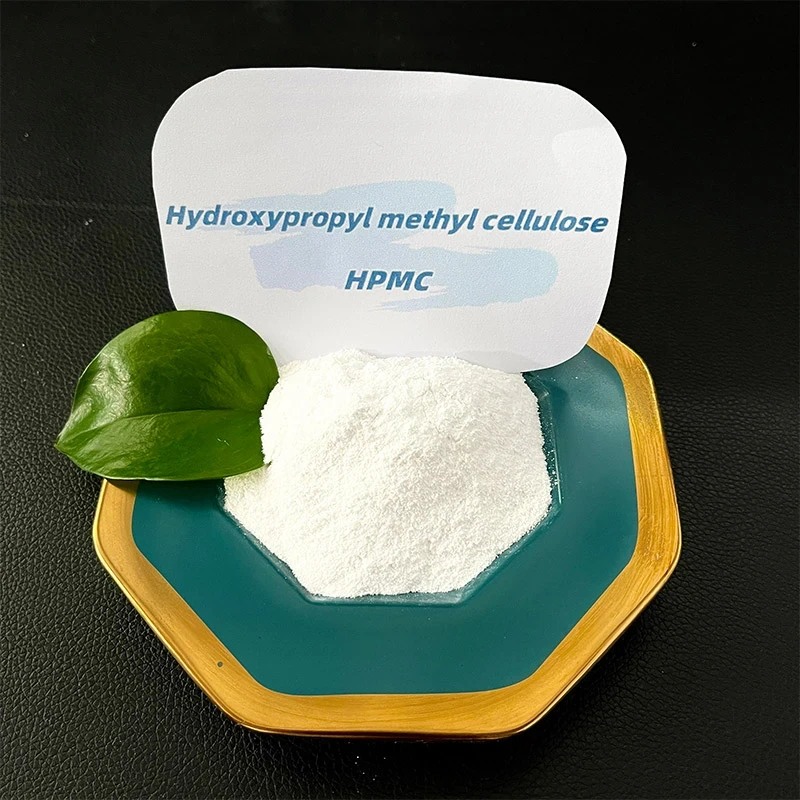
(how to dissolve hpmc in water)
FAQS on how to dissolve hpmc in water
Q: How to dissolve HPMC in water?
A: Gradually sprinkle HPMC powder into cold water while stirring vigorously to avoid clumping. Avoid adding powder all at once. Heating the mixture afterward (below 50°C) accelerates dissolution.
Q: Is HPMC soluble in cold water?
A: HPMC hydrates and swells in cold water but dissolves slowly without heat. Its hydroxypropyl content allows partial solubility. Full dissolution requires thermal activation or extended mixing time.
Q: Why doesn't HPMC fully dissolve immediately in water?
A: HPMC forms a protective gel layer when contacting water, hindering rapid dissolution. The outer gel barrier slows internal particle hydration. Heating breaks this barrier for complete solubility.
Q: What's the optimal water temperature to dissolve HPMC?
A: Use cold water (<30°C) initially to prevent premature gelling. After dispersion, heat to 40-50°C while stirring to achieve clear solution. Temperatures above 90°C degrade HPMC.
Q: How to prevent HPMC clumping during water dissolution?
A: Ensure equipment and water are moving before adding powder. Sift HPMC through screens or use high-shear mixers for dispersion. Never pour water onto dry HPMC aggregates.
-
Industrial Guide to ГПМЦ целлюлоза High Performance CelluloseNewsApr.16,2026
-
Wood Cellulose Properties and Industrial Applications GuideNewsApr.09,2026
-
Does Wood Contain Cellulose A Detailed Exploration of its Composition and UsesNewsApr.07,2026
-
Understanding Wood Cellulose Meaning Applications and Future TrendsNewsApr.04,2026
-
Exploring the Potential of Wood Cellulose is wood cellulose a Sustainable MaterialNewsMar.31,2026
-
Exploring the Sustainability and Versatility of Cellulose Wood ChipsNewsMar.28,2026
-
Understanding Wood Pulp Cellulose A Comprehensive Guide to Properties and ApplicationsNewsMar.26,2026