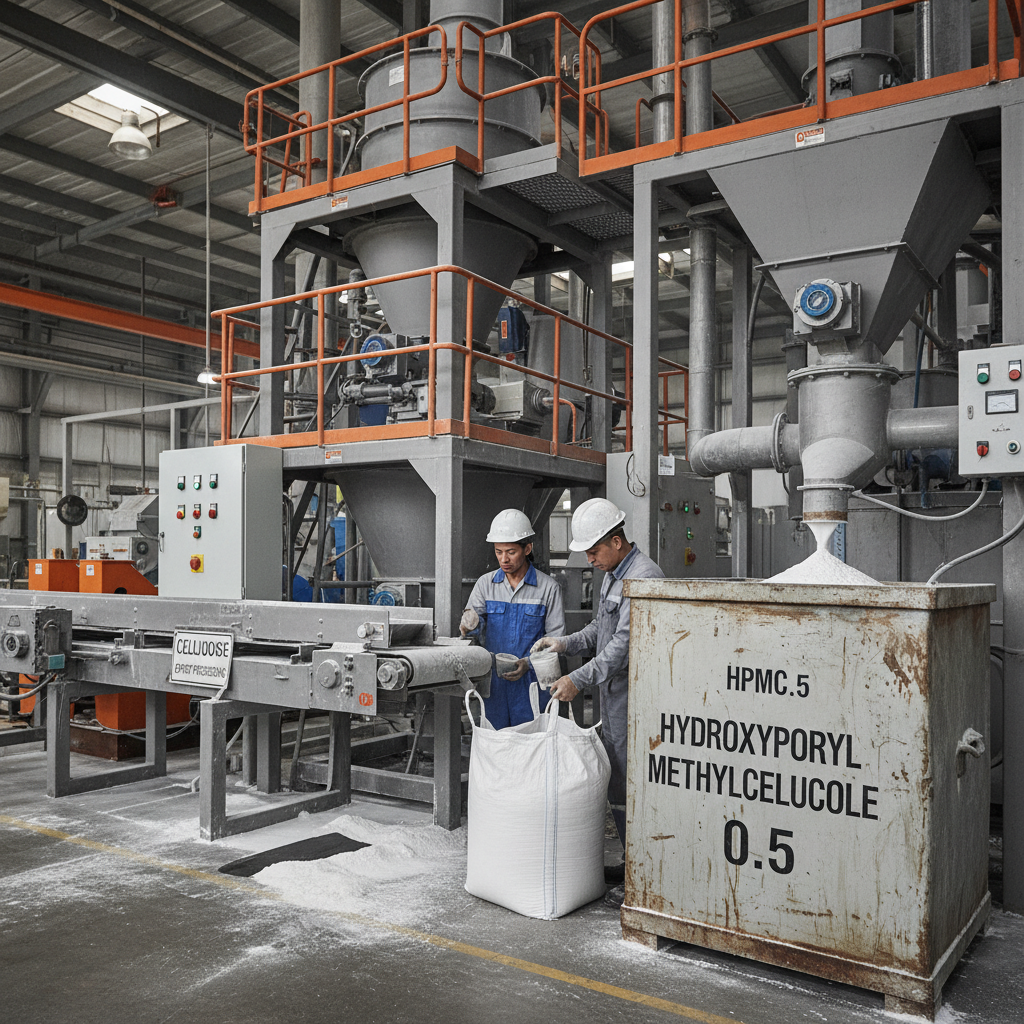
Wecome to HeBei ShengShi HongBang Cellulose Technology CO.,LTD.

  • fff1
  • fff2
  • fff3
  • fff4
  • Group 205.webp1
HeBei ShengShi HongBang Cellulose Technology CO.,LTD.
0%

Table of Contents

Hydroxypropyl methylcellulose powder (HPMC) is a versatile polymer finding increasing application across diverse industries globally. Its unique properties – including thickening, binding, film-forming, and water retention – make it invaluable in pharmaceuticals, construction, food, cosmetics, and more. Understanding HPMC is crucial for innovation and efficiency across these sectors, contributing to improved product performance and sustainability.

The demand for HPMC is driven by population growth, urbanization, and a heightened focus on product quality and performance. Global HPMC market size was valued at USD 6.87 billion in 2023 and is projected to grow at a compound annual growth rate (CAGR) of 5.2% from 2024 to 2032. This expansion reflects the widening scope of applications and the ongoing need for reliable, multi-functional ingredients. Its increasing use as a sustainable alternative to traditional materials further fuels this growth.

This detailed exploration will delve into the properties, applications, and future trends surrounding hydroxypropyl methylcellulose powder, providing a comprehensive understanding for professionals and anyone interested in this vital material. We will cover its core characteristics, real-world implementations, and the challenges and opportunities that lie ahead.

Exploring Hydroxypropyl Methylcellulose Powder Applications and Market Trends

Introduction to Hydroxypropyl Methylcellulose Powder

Exploring Hydroxypropyl Methylcellulose Powder Applications and Market Trends

Hydroxypropyl methylcellulose powder is a cellulose ether derivative, produced by chemically modifying cellulose. This modification introduces both methyl and hydroxypropyl groups, lending it a unique combination of properties. These modifications allow HPMC to dissolve in water and create solutions with varying viscosity depending on the grade and concentration.

The versatility of hydroxypropyl methylcellulose powder stems from its ability to perform multiple functions, acting as a thickener, binder, film former, protective colloid, suspending agent, and surfactant. This multi-functionality makes it a cost-effective and efficient ingredient across a broad spectrum of formulations.

Global Relevance and Market Overview

The global demand for cellulose ethers, including HPMC, is closely tied to economic growth, particularly in emerging markets. Increased construction activity, pharmaceutical production, and food processing all contribute to the growing need for this versatile polymer. Regions like Asia-Pacific, particularly China and India, represent the largest consumers and producers of HPMC, driven by rapid industrialization and a large population base.

The construction industry is a major consumer of HPMC, utilizing it in cement-based products, tile adhesives, and render systems to improve workability, water retention, and adhesion. Pharmaceutical companies rely on HPMC as a binder and controlled-release agent in tablets and capsules. The food industry employs HPMC as a thickener, stabilizer, and emulsifier in a variety of products. This widespread demand ensures its continued global relevance.

A challenge facing the HPMC market is the reliance on wood pulp as a primary raw material, prompting research into sustainable sourcing and alternative cellulose sources. Furthermore, stringent quality control and adherence to international standards like ISO 9001 are crucial to maintaining product integrity and consumer trust.

Defining Hydroxypropyl Methylcellulose Powder

Hydroxypropyl methylcellulose powder is a non-ionic, water-soluble polymer derived from cellulose. It is a white or off-white, odorless, tasteless powder that is available in a variety of viscosity grades, particle sizes, and substitution patterns. The degree of substitution (DS) refers to the average number of substituent groups – methyl and hydroxypropyl – attached to each anhydroglucose unit of the cellulose chain.

The unique characteristics of HPMC arise from the combination of the cellulose backbone and the attached functional groups. The methyl groups contribute to the polymer’s hydrophobicity, while the hydroxypropyl groups enhance its water solubility and thermal gelation properties. This balance allows HPMC to exhibit a wide range of functionalities and adapt to diverse applications.

This sophisticated material represents a crucial link between natural resources and modern industrial needs. Its ability to replace or enhance the performance of traditional materials in countless applications underscores its importance in addressing challenges across various sectors. hydroxypropyl methylcellulose powder is more than just an ingredient; it's an enabling technology.

Key Properties of Hydroxypropyl Methylcellulose Powder

The effectiveness of HPMC stems from a suite of crucial properties. One key aspect is its water solubility. HPMC dissolves readily in cold water, forming clear, viscous solutions. This solubility is tunable based on the degree of substitution and molecular weight. Secondly, viscosity control is paramount. HPMC offers a broad range of viscosity grades, allowing formulators to achieve desired texture and flow properties.

Another vital property is thermal gelation. HPMC solutions exhibit a unique ability to gel upon heating, and revert to a liquid state upon cooling. This behavior is particularly useful in applications requiring temperature-sensitive release mechanisms. Finally, HPMC provides excellent film-forming capabilities, creating flexible, strong, and transparent films.

HPMC Property Ratings (1-10)


Diverse Applications Across Industries

The pharmaceutical sector heavily utilizes hydroxypropyl methylcellulose powder as a binder in tablet formulations, ensuring tablet integrity and controlled drug release. In construction, it's a crucial additive in cement-based materials, improving workability, adhesion, and water retention, preventing cracking and enhancing durability.

In the food industry, HPMC acts as a thickener, stabilizer, and emulsifier in products like sauces, desserts, and baked goods, improving texture and shelf life. Cosmetic formulations benefit from its film-forming and thickening properties, enhancing product consistency and application. These diverse applications highlight the broad adaptability of HPMC.

Advantages and Long-Term Value Proposition

The use of HPMC offers significant cost efficiencies. Its multi-functionality reduces the need for multiple additives, simplifying formulations and lowering overall production costs. Moreover, HPMC’s biodegradability and renewability contribute to its sustainability profile, appealing to environmentally conscious consumers and businesses.

Beyond economics and sustainability, HPMC enhances product safety and reliability. Its non-toxicity and compatibility with various ingredients ensure product integrity and minimize the risk of adverse reactions. This reliability fosters trust among consumers and strengthens brand reputation.

Future Trends and Innovations in HPMC

Ongoing research focuses on developing HPMC with tailored properties for specific applications, such as enhancing controlled-release characteristics in pharmaceuticals or improving water resistance in construction materials. Exploring alternative cellulose sources, such as agricultural waste, is a key area of innovation, promoting sustainability and reducing reliance on wood pulp.

Digital transformation and automation in HPMC manufacturing processes are optimizing production efficiency and quality control. The integration of advanced analytics and machine learning will enable more precise process optimization and product customization. These advancements will solidify HPMC’s position as a leading polymer in diverse industries.

The future promises a more sustainable and sophisticated HPMC, driven by technological advancements and a growing demand for environmentally friendly and high-performance materials.

Summary of Key Analysis Dimensions for HPMC Performance

Application Area HPMC Grade Performance Metric Performance Score (1-10)
Pharmaceutical Tablet Binding HPMC K100 Tablet Hardness 9
Construction Tile Adhesive HPMC E4M Open Time 8
Food Sauce Thickening HPMC F50 Viscosity 7
Cosmetic Lotion Stabilizing HPMC A15 Emulsion Stability 6
Paint Formulation Thickener HPMC MHEC Paint Leveling 8
Ceramic Extrusion Binder HPMC K4M Green Strength 9

FAQS

What are the primary benefits of using hydroxypropyl methylcellulose powder in pharmaceutical tablet formulations?

Hydroxypropyl methylcellulose powder offers several key advantages in pharmaceutical applications. It acts as an excellent binder, ensuring tablet integrity and preventing crumbling during handling and storage. Crucially, it’s also a versatile controlled-release agent, allowing for the precise regulation of drug delivery. Its non-toxicity and biocompatibility make it a safe and reliable excipient, meeting stringent pharmaceutical standards. Different grades allow for tailoring release profiles, offering both immediate and sustained release options.

How does HPMC improve the performance of cement-based construction materials?

Hydroxypropyl methylcellulose powder significantly enhances the properties of cement-based materials. It dramatically improves workability, making the mixture easier to apply and reducing the need for excess water. HPMC also enhances water retention, preventing premature drying and cracking, particularly in hot or windy conditions. This leads to increased adhesion, durability, and overall strength of the final construction product, reducing maintenance costs and extending service life.

Is hydroxypropyl methylcellulose powder a sustainable material?

Yes, HPMC is considered a relatively sustainable material. It’s derived from cellulose, a naturally abundant polymer found in plants. While traditionally sourced from wood pulp, increasing efforts are focused on utilizing alternative cellulose sources like agricultural waste, further enhancing its sustainability profile. HPMC is also biodegradable under certain conditions, reducing its environmental impact compared to many synthetic polymers.

What factors influence the viscosity of an HPMC solution?

Several factors affect the viscosity of an HPMC solution. The grade of HPMC – denoted by the K-value – is a primary determinant, with higher K-values indicating higher viscosity. Concentration, temperature, pH, and the presence of salts also play a role. Higher concentrations generally lead to higher viscosity, while increased temperature typically reduces viscosity. Careful control of these parameters is essential for achieving desired formulation characteristics.

Can HPMC be used in vegan or vegetarian food products?

Yes, hydroxypropyl methylcellulose powder is often used in vegan and vegetarian food products as a functional ingredient. It is a plant-derived cellulose ether, making it suitable for those following plant-based diets. HPMC can act as a thickener, stabilizer, and emulsifier, providing texture and improving the overall quality of various food items without relying on animal-derived ingredients.

What is the shelf life of hydroxypropyl methylcellulose powder, and how should it be stored?

When stored correctly, hydroxypropyl methylcellulose powder has a long shelf life, generally exceeding five years. It should be stored in a cool, dry place, away from direct sunlight and moisture. Maintaining a temperature below 30°C (86°F) and relative humidity below 60% is recommended. Properly sealed containers are essential to prevent clumping and degradation of the polymer.

Conclusion

In conclusion, hydroxypropyl methylcellulose powder is a remarkably versatile and valuable polymer with widespread applications across a diverse range of industries. Its unique combination of properties—including water solubility, viscosity control, thermal gelation, and film-forming capabilities—makes it an indispensable ingredient for improving product performance, enhancing sustainability, and driving innovation. Understanding its characteristics and potential is crucial for formulators and engineers seeking to optimize their products and processes.

Looking ahead, continued research and development promise even more sophisticated HPMC materials tailored to specific needs. Embracing sustainable sourcing practices and leveraging advanced manufacturing techniques will further solidify HPMC’s position as a key building block for a more efficient and environmentally responsible future. Visit our website at www.sshbhpmc.com to learn more about our high-quality hydroxypropyl methylcellulose powder products and how we can assist you with your specific applications.

Michael Davis

Michael Davis

Michael Davis is a Research & Development Engineer at Hebei ShengShi HongBang Cellulose Technology, specializing in HPMC formulation for the paint and coatings industry. He possesses a strong chemical engineering background and is instrumental in developing innovative HPMC grades that improve coating performance – enhancing leveling, preventing powdering, and increasing
Previous Hydroxypropyl Methylcellulose Safe Applications and Comprehensive Safety Assessments
Next Exploring the Versatility of Hydroxypropyl Methylcellulose k4m Across Industries