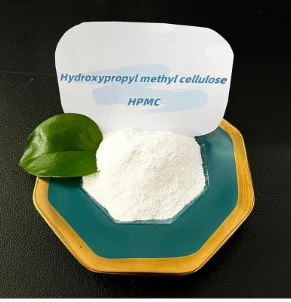
Hypromellose hydroxypropyl methylcellulose (HPMC) is a versatile polymer finding increasing applications across numerous industries globally. Its unique properties, including controlled release capabilities, thickening effects, film-forming abilities, and biocompatibility, make it an essential ingredient in pharmaceuticals, food, cosmetics, construction, and various industrial processes. Understanding its functionalities and potential is vital for innovation and optimization within these sectors, contributing to improved product quality and efficiency.
The demand for HPMC is directly correlated with population growth, advancements in healthcare, and evolving consumer preferences for higher-quality products. Driven by the pharmaceutical industry’s need for sophisticated drug delivery systems and the food sector’s requirements for texture modification and stabilization, the global HPMC market is experiencing sustained growth. This growth presents both opportunities and challenges, requiring manufacturers and researchers to continually refine production techniques and explore new applications for this remarkable material.
Ultimately, the widespread adoption of hypromellose hydroxypropyl methylcellulose is fueled by its adaptability and ability to address specific performance requirements, enhancing the efficacy and appeal of a vast range of products that impact daily life.
Introduction to hypromellose hydroxypropyl methylcellulose
hypromellose hydroxypropyl methylcellulose, often shortened to HPMC, is a semi-synthetic, inert, non-toxic polymer produced by modifying cellulose. It’s a remarkably versatile material with properties that make it invaluable across diverse industries. Its ability to act as a thickener, binder, film-former, and controlled-release agent are key to its widespread adoption.
Understanding the nuanced behavior of hypromellose hydroxypropyl methylcellulose is crucial for formulators and researchers aiming to optimize product performance. Factors such as viscosity, gelation temperature, and solubility are carefully controlled during manufacturing to tailor HPMC grades to specific applications.
Global Relevance and Applications of HPMC
The global HPMC market is experiencing robust growth, projected to reach significant values in the coming years. This expansion is driven by increasing demand in pharmaceutical formulations, particularly for oral solid dosage forms where HPMC is utilized for controlled drug release. The United Nations projects a continued rise in global population and aging demographics, increasing the need for advanced pharmaceutical delivery systems, further bolstering HPMC demand.
Beyond pharmaceuticals, the food industry relies heavily on hypromellose hydroxypropyl methylcellulose as a stabilizer, thickener, and emulsifier in a wide range of products, including sauces, desserts, and baked goods. The World Bank's focus on food security and improved food processing technologies also indirectly contributes to the demand for effective food additives like HPMC.
A significant challenge the industry addresses is ensuring sustainable sourcing of cellulose, the raw material for HPMC production. The move towards more eco-friendly production processes and bio-based materials is driving innovation in cellulose extraction and HPMC synthesis.
Defining hypromellose hydroxypropyl methylcellulose
At its core, hypromellose hydroxypropyl methylcellulose is a cellulose ether. Cellulose, sourced primarily from wood pulp or cotton linter, undergoes chemical modifications—hydroxylation, methylation, and propylation—to create HPMC. These modifications alter the polymer’s properties, influencing its solubility, viscosity, and thermal behavior.
The degree of substitution (DS) of these modifying groups is carefully controlled during the manufacturing process. Higher DS values generally lead to increased hydrophobicity and altered solubility characteristics. This precise control allows manufacturers to tailor HPMC grades for very specific applications, making it a uniquely adaptable polymer.
Its connection to modern needs lies in its ability to solve complex formulation challenges. In pharmaceuticals, it enables targeted drug delivery. In construction, it improves the workability and water retention of cement-based materials. These are just two examples of how HPMC impacts daily life and supports critical infrastructure.
Key Characteristics of hypromellose hydroxypropyl methylcellulose
One of the defining traits of hypromellose hydroxypropyl methylcellulose is its versatility in viscosity. Different grades of HPMC offer a wide range of viscosity levels, allowing for precise control over the thickening and rheological properties of formulations. This is critical in applications like coatings and adhesives.
Secondly, HPMC exhibits excellent film-forming capabilities. It creates clear, flexible, and strong films that are useful in tablet coating, seed encapsulation, and controlled-release matrices. The film’s permeability can be adjusted based on the grade of HPMC used and the formulation parameters.
Comparative Analysis of hypromellose hydroxypropyl methylcellulose Grades
Real-World Applications of hypromellose hydroxypropyl methylcellulose
In the pharmaceutical sector, hypromellose hydroxypropyl methylcellulose is extensively used in tablet coatings, providing a protective barrier and enabling controlled drug release. Different grades are selected based on the desired release profile, ensuring optimal therapeutic efficacy. For instance, sustained-release formulations often utilize higher viscosity grades.
The construction industry leverages HPMC as a water-retention agent and thickener in cement-based mortars and plasters. This improves workability, adhesion, and reduces cracking, especially in challenging environments. In post-disaster relief operations, the ability to rapidly prepare durable and workable building materials using HPMC is invaluable.
Advantages and Long-Term Value of HPMC
The cost-effectiveness of hypromellose hydroxypropyl methylcellulose, coupled with its high performance, makes it a desirable ingredient for numerous applications. Compared to some alternative polymers, HPMC offers a favorable price-to-performance ratio. Moreover, its ease of processing and compatibility with other excipients simplifies formulation development.
From a sustainability standpoint, HPMC is derived from renewable cellulose sources, offering a more environmentally friendly alternative to petroleum-based polymers. Its biodegradability further enhances its appeal. The peace of mind knowing a product is created with responsible materials adds long-term trust in the brand.
The long-term value of HPMC also stems from its contribution to product safety and quality. Its inert nature and biocompatibility minimize the risk of adverse reactions, ensuring consumer confidence and regulatory compliance.
Future Trends and Innovations in hypromellose hydroxypropyl methylcellulose
Research and development efforts are focused on enhancing the functionality of hypromellose hydroxypropyl methylcellulose through chemical modifications and blending with other polymers. This aims to create materials with tailored properties for specialized applications, such as advanced drug delivery systems and biodegradable packaging.
The integration of digital technologies and automation in HPMC manufacturing is also gaining momentum. Real-time monitoring and control systems improve process efficiency, reduce waste, and ensure consistent product quality. The rise of "smart" polymers, responsive to external stimuli, represents a promising frontier in HPMC innovation.
Sustainability remains a key driver of innovation. Exploring alternative cellulose sources and developing more eco-friendly production methods are critical for ensuring the long-term viability of the HPMC industry.
Summary of Challenges and Solutions Related to hypromellose hydroxypropyl methylcellulose Production and Application
| Challenge |
Impact on HPMC Performance |
Potential Solution |
Implementation Cost (Scale 1-10) |
| Raw Material Sourcing |
Variability in cellulose quality impacts HPMC consistency |
Sustainable cellulose sourcing programs & quality control |
6 |
| Batch-to-Batch Variability |
Inconsistent viscosity & molecular weight |
Advanced process control & automation |
8 |
| Solubility Issues |
Poor dispersion & gel formation |
Optimized particle size & surface modification |
5 |
| Thermal Degradation |
Loss of functionality at high temperatures |
Stabilizers & controlled processing conditions |
4 |
| Limited Water Solubility in Cold Water |
Difficulties in certain applications requiring easy dissolution |
Pre-gelatinization or co-processing with solubilizers |
7 |
| Cost Competition from Alternatives |
Price pressure impacting profitability |
Process optimization & value-added product development |
3 |
FAQS
HPMC is widely used in pharmaceuticals as a binder for tablets, a film-coating agent for modified release, a viscosity-increasing agent for suspensions, and a matrix former for controlled-release systems. Its biocompatibility and ability to control drug release make it essential for achieving optimal therapeutic outcomes. Different viscosity grades are selected based on the desired release profile and formulation requirements. Understanding HPMC's properties is crucial for developing effective drug delivery systems.
Viscosity is a critical characteristic of HPMC, dictating its thickening, suspending, and film-forming properties. Higher viscosity grades generally provide greater thickening and water retention, ideal for applications like cement-based materials and controlled-release formulations. Lower viscosity grades are preferred when rapid dissolution or ease of processing is required. Selecting the appropriate viscosity grade is essential for achieving the desired performance in a specific application.
HPMC is derived from cellulose, a renewable resource, making it more environmentally friendly compared to petroleum-based polymers. While not rapidly biodegradable under all conditions, it can be degraded by microorganisms in soil and water. Ongoing research focuses on enhancing its biodegradability further. Using sustainably sourced cellulose and eco-friendly production methods are key to maximizing HPMC's environmental benefits.
HPMC should be stored in a cool, dry place, protected from direct sunlight and humidity. Exposure to moisture can cause clumping and affect its viscosity. Proper storage conditions are crucial for maintaining its quality and performance characteristics. It’s best to keep it in its original, sealed container to prevent contamination and degradation. Avoid extreme temperature fluctuations during storage.
HPMC, methylcellulose, and carboxymethylcellulose differ in their degree of substitution and chemical structure, impacting their properties. HPMC generally exhibits better thermal gelation properties and wider pH stability. Methylcellulose is more sensitive to pH, while carboxymethylcellulose has higher water solubility. The choice depends on the specific application requirements. HPMC offers a balance of properties suitable for diverse industries.
Yes, HPMC is widely used in the food industry as a thickener, stabilizer, emulsifier, and film-forming agent. It improves the texture and mouthfeel of products like sauces, desserts, and bakery items. It’s also used in low-calorie foods as a bulking agent. Its use is regulated by food safety authorities, ensuring its safety for consumption. Specific grades of HPMC are approved for food applications.
Conclusion
In conclusion, hypromellose hydroxypropyl methylcellulose stands as a remarkably versatile and indispensable polymer impacting a wide array of industries. Its unique combination of properties – including controlled release, thickening, film formation, and biocompatibility – allows it to address complex formulation challenges and enhance product performance. From pharmaceuticals and food to construction and beyond, HPMC continues to be a cornerstone of innovation and quality.
Looking ahead, continued research and development focused on sustainability, process optimization, and the exploration of novel applications will solidify hypromellose hydroxypropyl methylcellulose’s role as a vital material for the future. To learn more about the capabilities of HPMC and how it can benefit your application, visit our website: www.sshbhpmc.com.