-

Add: HeBei ShengShi HongBang Cellulose Technology CO.,LTD.
-

Email
13180486930@163.com -

CONTACT US
+86 13180486930


Add: HeBei ShengShi HongBang Cellulose Technology CO.,LTD.
CONTACT US
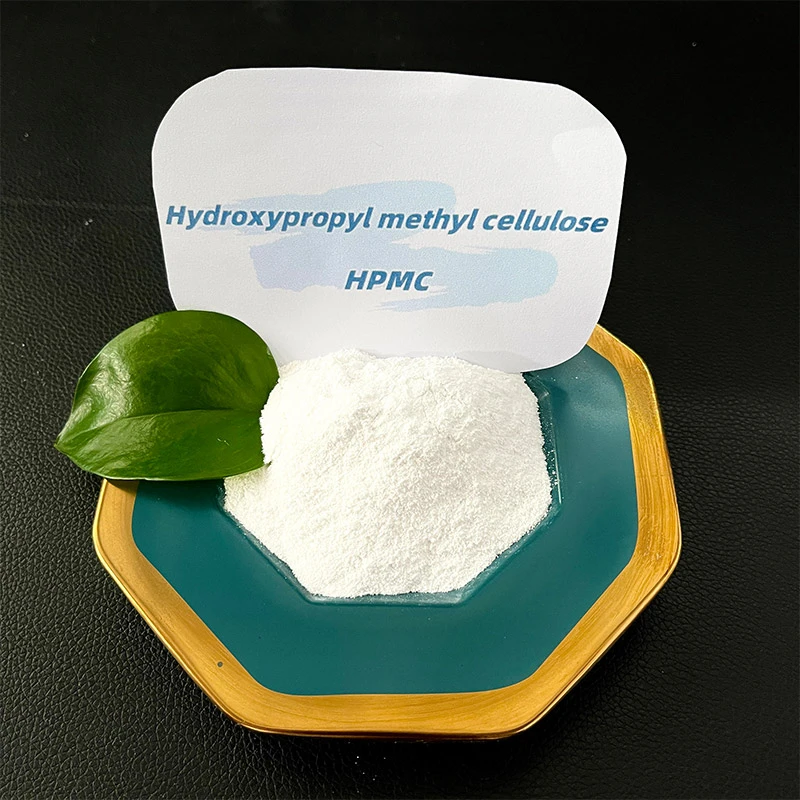
+86 13180486930Formulators and production managers often face a critical crossroads when optimizing building materials or cosmetic products. The frustration of dealing with traditional malicious adulteration, uneven product quality from batch to batch, and suppliers shirking responsibility for quality issues can derail an entire production line. When evaluating your cellulose ether options, understanding the nuances of an accurate HPMC vs MC comparison is the first step toward securing chemical stability and operational peace of mind.
Backed by more than 20 years of dedicated industry experience, our state-of-the-art manufacturing facility in the Xinji provincial clean chemical Industry Park was built precisely to solve these industry-wide pain points. We operate on a foundational promise: a one-stop service from production to after-sales, supported by professional testing. Covering over 80 acres and powered by 200 skilled employees and 11 senior technical personnel, we ensure that every formulation decision you make is backed by a guaranteed 100% product quality rate. When you choose to upgrade your chemical additives, you are not just buying a product; you are integrating decades of refined expertise into your own manufacturing process.
To truly understand the value derived from a comprehensive HPMC vs MC comparison, it is essential to look at the underlying engineering and manufacturing standards. While Methyl Cellulose (MC) offers baseline functionality, Hydroxypropyl Methyl Cellulose (HPMC) introduces enhanced solubility, higher bonding strength, and superior thermal gelation temperatures. By utilizing a German horizontal kettle one-step production process, we have completely eliminated the inconsistencies typically found in traditional manufacturing methods.
Below is a detailed breakdown of how our advanced manufacturing parameters directly influence the performance capabilities of our cellulose products, setting a new benchmark in the industry.
| Performance Metric | Industry Significance | Our Engineering Standard | Advantage |
|---|---|---|---|
| Viscosity Range | Determines application versatility across different formulations. | 1 to 200,000 mPa.s & Instant Cosmetics Grade | Allows for precise customization, ensuring optimal flow and water retention for specific end-use cases. |
| Production Process | Directly impacts chemical purity and molecular stability. | German horizontal kettle one-step process | Achieves a 100% product quality rate, eradicating uneven batch-to-batch quality. |
| Bonding Strength | Crucial for the structural integrity of construction materials. | High bonding strength with strict professional testing | Prevents material failure, reducing rework and ensuring year-round application stability. |
| Supply Capacity | Prevents costly supply chain disruptions and line stoppages. | 80-100 tons daily; 30,000 to 40,000 tons annual output | Guarantees reliable, scalable global delivery to more than 30 countries and regions. |
The transition from a basic chemical additive to a premium, highly controlled formulation is an investment that yields measurable financial returns. When executing a thorough HPMC vs MC comparison, astute procurement teams recognize that true cost savings are found in waste reduction, formulation efficiency, and zero-defect end products. By rejecting malicious adulteration and ensuring every gram of our 30,000 to 40,000 tons of annual output meets exact specifications, we protect your profit margins from the hidden costs of poor quality control.
Our global footprint, successfully exporting to over 30 countries, is a testament to the long-term ROI our partners achieve. Below, the data illustrates the significant stability advantage of utilizing our precision-engineered HPMC compared to standard market MC alternatives across a 12-month continuous production cycle.
Related products
Top Selling Products